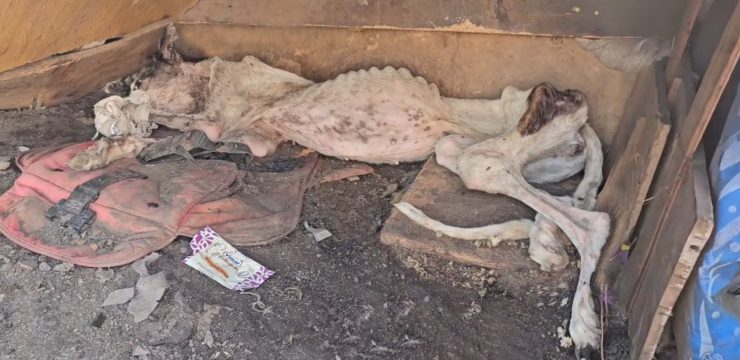
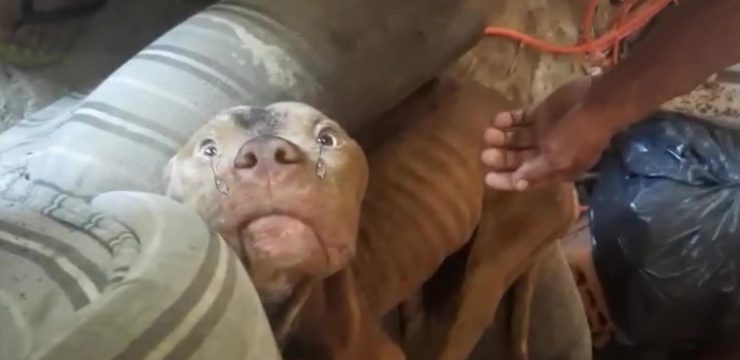
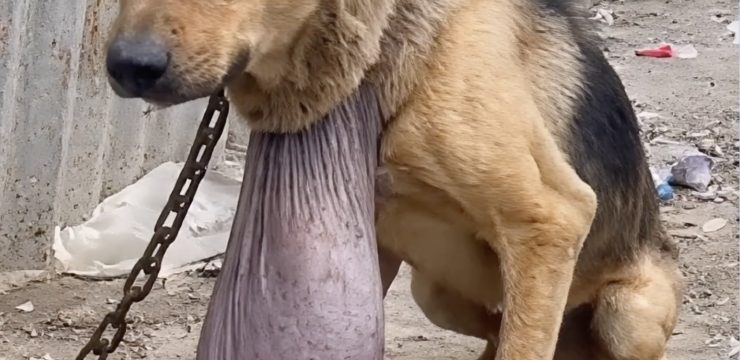
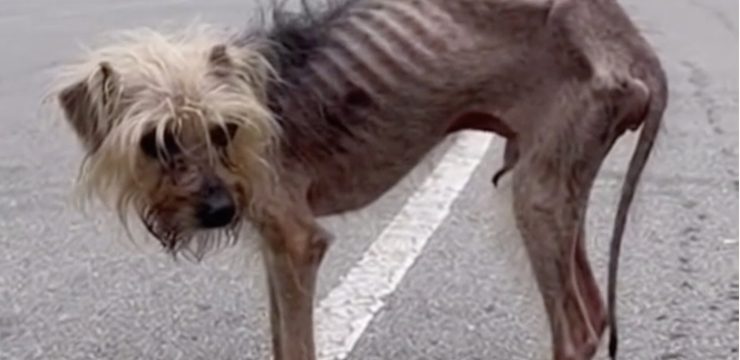
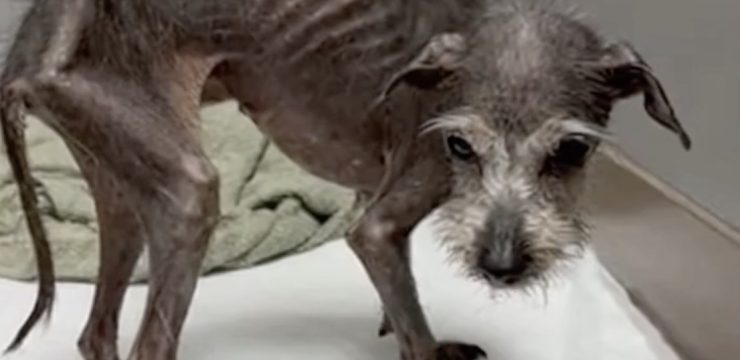
When rescuers first laid eyes on Bono, the Doberman, their hearts broke. What stood before them was not the proud, noble image people usually associate with the breed, but a fragile creature who seemed to be hanging onto life by a thread. His body was little more than skin stretched over bones, and he was too weak to even lift himself from the cold, dirty ground. His eyes told a story words could hardly express—a mix of exhaustion, confusion, and quiet suffering that no animal should ever endure. He had been discovered at a dog breeding facility that had long since been abandoned, left behind by his owner, a pet shop operator who had simply walked away.
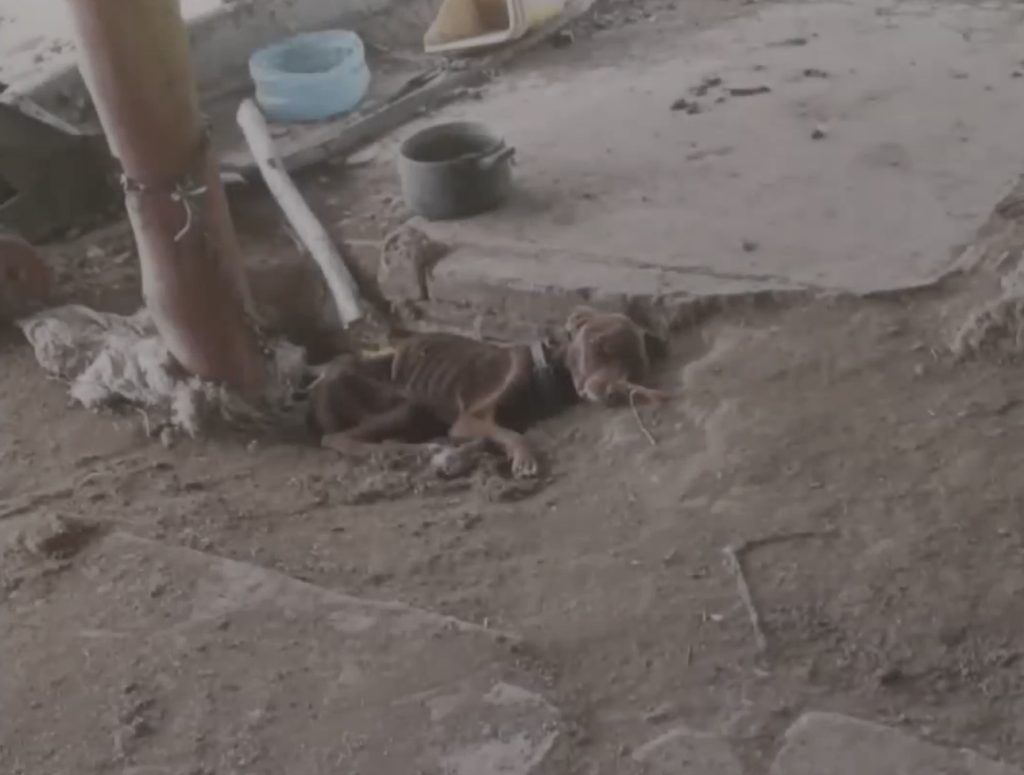
When help finally arrived, it came not a moment too soon. The rescuers, accompanied by local authorities, moved quickly to bring Bono to safety. They could see that his condition was dire—each shallow breath a battle, every movement a visible strain. They carefully lifted his frail body onto a stretcher, his head gently resting on a folded blanket as if finally sensing that, at last, someone cared. For the first time in a very long while, he was no longer alone.
At the veterinary clinic, doctors and nurses immediately sprang into action. A full examination revealed the heartbreaking truth: Bono was not just severely malnourished, but also suffering from a serious wound on his tail. The injury was infected and infested with parasites, a condition that would have been unbearably painful. Yet through it all, Bono remained quiet and still, as though too weak to resist, too tired to cry. His body temperature was dangerously low, and his pulse barely detectable. The team knew they were fighting against time.
Because he was too weak to eat on his own, the veterinarians had to feed him carefully through a syringe. Every few hours, they delivered small amounts of liquid nutrition, watching closely for any sign that his body could handle it. It was a slow, delicate process, but the team refused to give up. They worked around the clock, taking turns through the night to monitor him. Each day was a small victory—one steady heartbeat at a time.
Days passed, and then weeks. Little by little, Bono began to change. His once dull eyes started to show a flicker of life, a hint of curiosity, as though his spirit had begun to awaken again. He could lift his head for short moments now, and when a caretaker would speak softly to him, his ears would twitch ever so slightly, acknowledging the sound. That simple movement, as small as it was, filled everyone with hope.
Then came the day he managed to eat a few bites on his own. It was a turning point that felt almost miraculous. He licked the food slowly, unsure at first, but then more eagerly, as if remembering what it meant to want to live. The staff cheered quietly, their smiles filled with relief and gratitude. It was clear that Bono was beginning his journey back to life.
With regular feeding, his body slowly started to gain strength. His coat, once dry and patchy, began to shine again. His bones were no longer as visible, replaced by a healthy layer of muscle and weight. Every day he grew a little more alert, a little more responsive, greeting his caregivers with gentle nudges of his nose or a faint wag of his tail. It was hard to believe this was the same dog who had once been too weak to stand.
Eventually, Bono became strong enough for the surgery he desperately needed to repair his tail. It was a delicate operation, but the doctors were confident he could handle it now. The procedure went smoothly, and after a few days of rest, Bono’s recovery continued at an astonishing pace. His tail, once a source of agony, was now healing beautifully. He could move freely without pain, and his appetite returned in full.
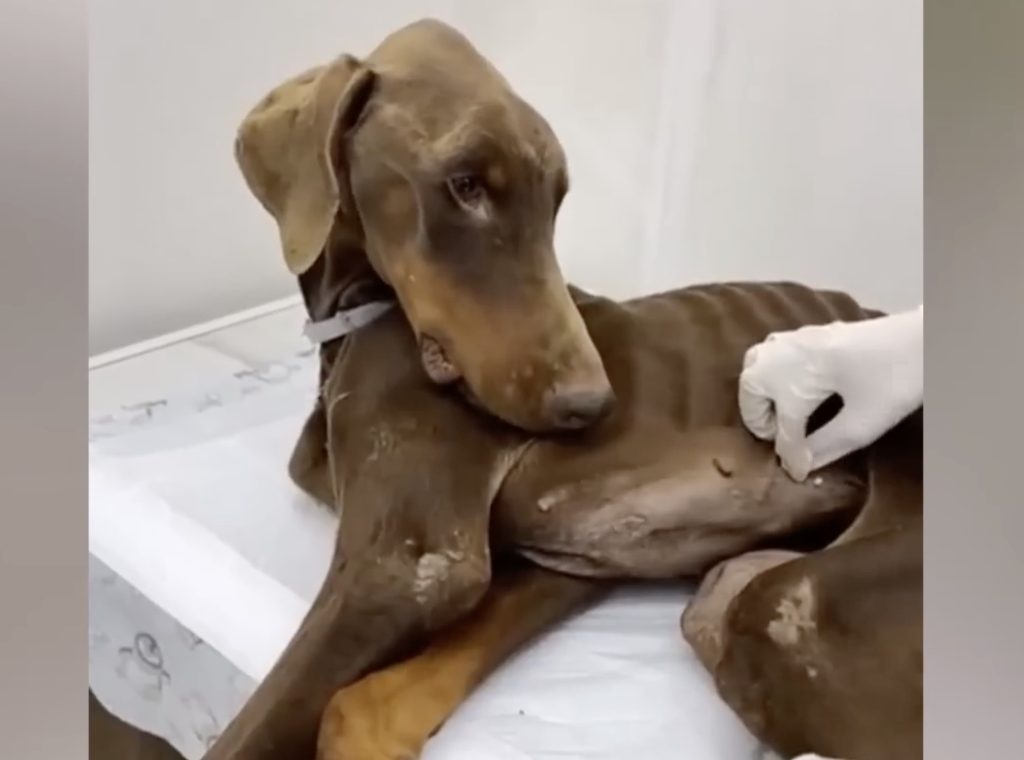
As the weeks turned into months, Bono’s transformation became nothing short of inspiring. He had gone from weighing almost nothing to gaining a healthy 22 pounds. His frame filled out, his posture straightened, and his eyes—those same eyes that had once looked so empty—now shone with warmth and gratitude. His spirit, once broken, had been mended by love, patience, and the relentless care of the people who refused to let him fade away.
It wasn’t long before Bono’s story began to spread beyond the clinic walls. People who heard about him were deeply moved by his resilience and his will to survive. Offers of adoption came from near and far, but his rescuers were determined to find not just any home, but the perfect one—a place where he would never again have to experience fear, neglect, or loneliness.
When that home finally came, it was everything they had hoped for. A kind family opened their hearts to Bono, welcoming him as one of their own. His new life was filled with all the things he had been denied for so long—warm beds, full meals, gentle hands, and endless affection. He quickly bonded with his new family, following them from room to room, always eager to be close. His once timid tail now wagged freely, a joyful rhythm that mirrored his newfound happiness.
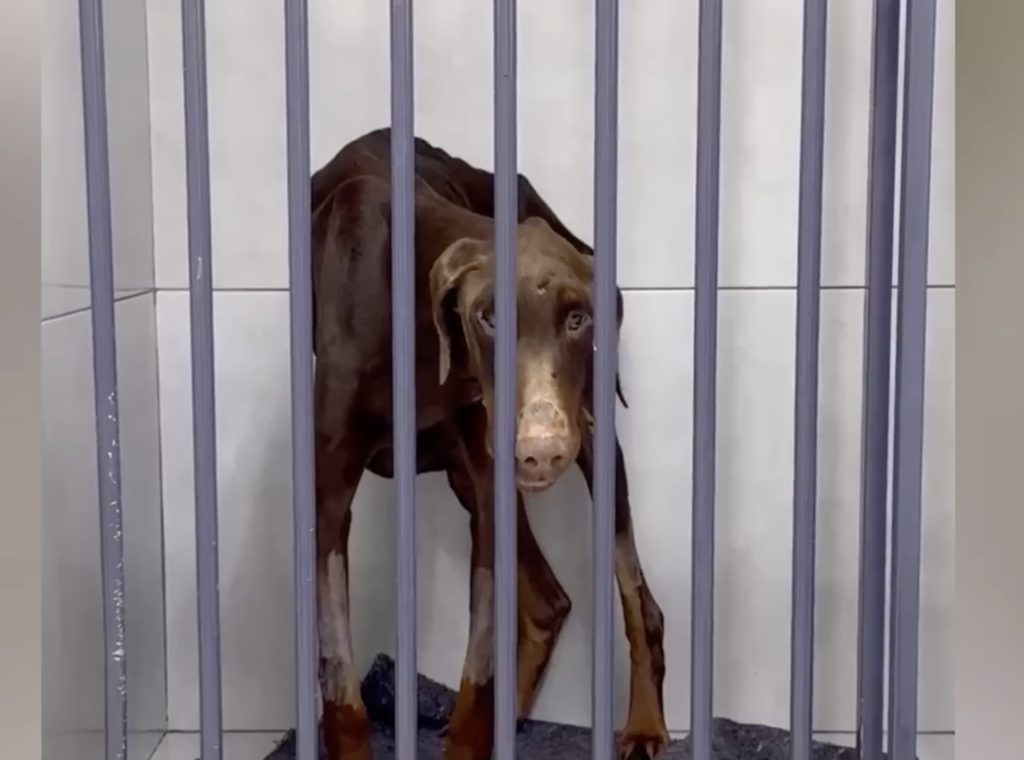
Today, Bono is a living reminder of how powerful compassion can be. His story is one of both heartbreak and hope—proof that even the most broken souls can heal when given a chance. He runs, plays, and greets each day with the kind of joy that only those who’ve known true suffering can fully appreciate. For those who rescued him, and for everyone who has followed his journey, Bono’s recovery stands as a beacon of what love, dedication, and kindness can accomplish.
From a near-fatal beginning to a beautiful new life, Bono’s journey reminds us that every life—no matter how lost or hopeless it may seem—deserves a second chance. His scars will always tell the story of where he’s been, but his bright eyes and wagging tail tell an even greater one: of survival, of trust regained, and of a heart that learned to love again.