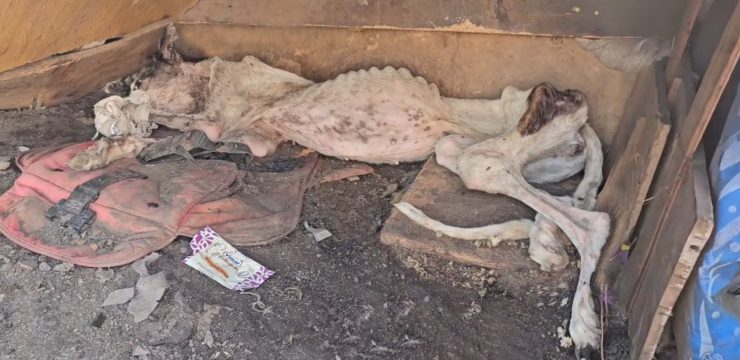
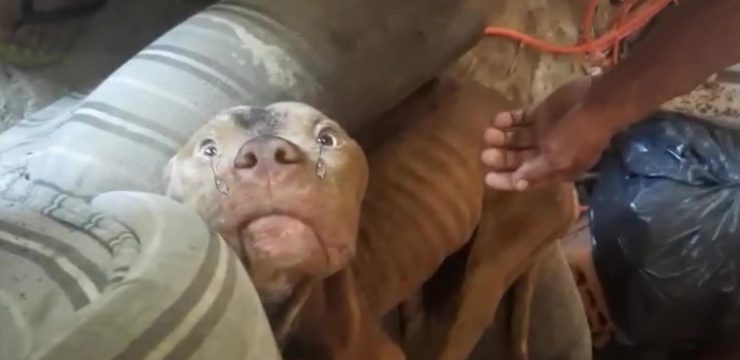
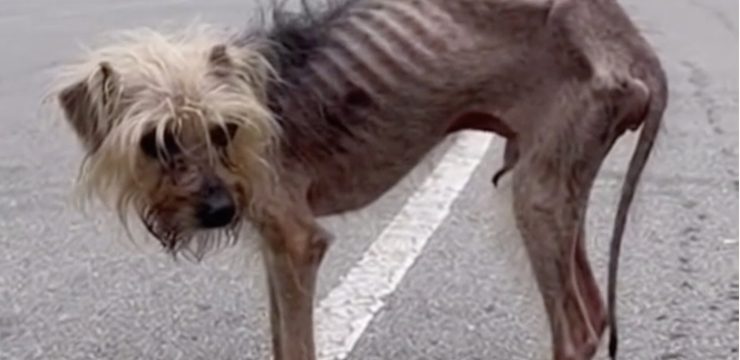
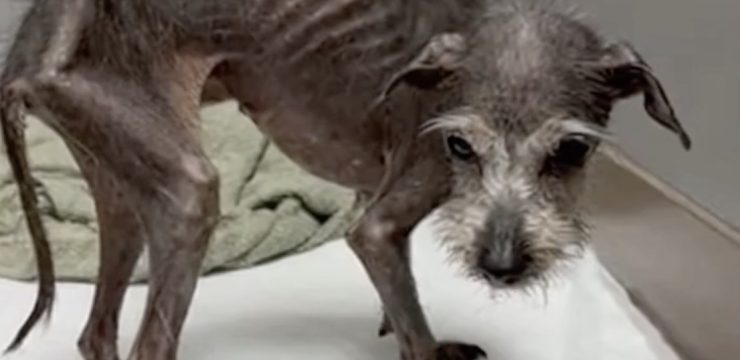
It was a heartbreaking sight the moment the dog was brought into the clinic — a fragile soul barely clinging to life. The room fell silent as the vet team gathered around, each of them struck by how thin and frail he was. You could see every rib, every contour of his tiny frame, as if his body had long forgotten what it meant to be nourished. His fur was no longer fur at all, just a tangle of dirty, matted hair clinging to skin that had lost its strength. His eyes were filled with pain and exhaustion, clouded with infection and dried tears. Yet somewhere deep inside those eyes, there was still a spark — faint, but unmistakably alive.
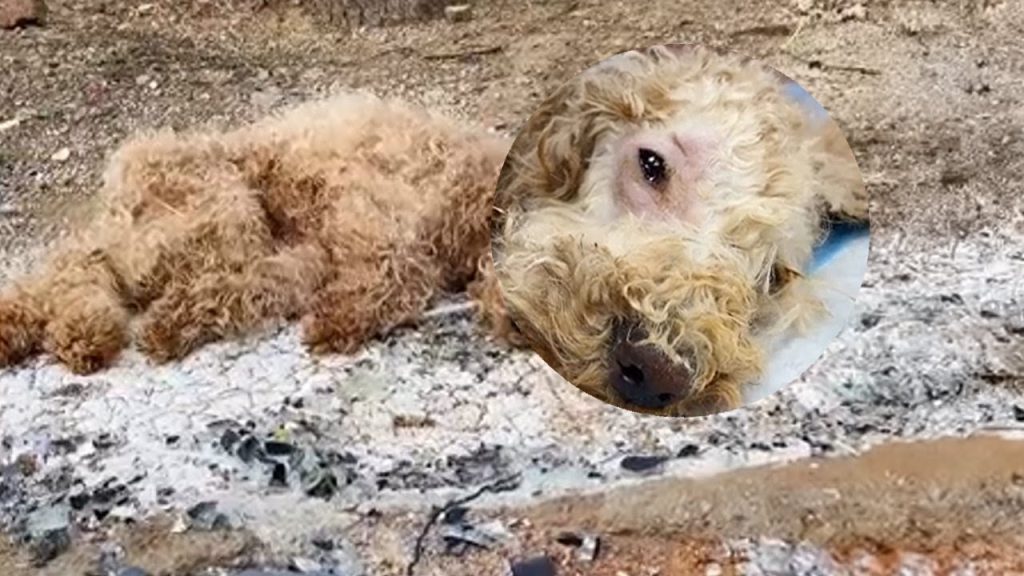
The veterinarians moved quickly. They shaved away the layers of filthy, tangled fur that had become a prison around his small body. They cleaned the dried pus from his eyes, gently wiping away the grime that had hidden their soft brown color. Every movement was careful, deliberate, as though they feared one wrong touch might break him. Beneath the sterile lights of the clinic, the team worked tirelessly — not just to heal his body, but to give him a fighting chance at life.
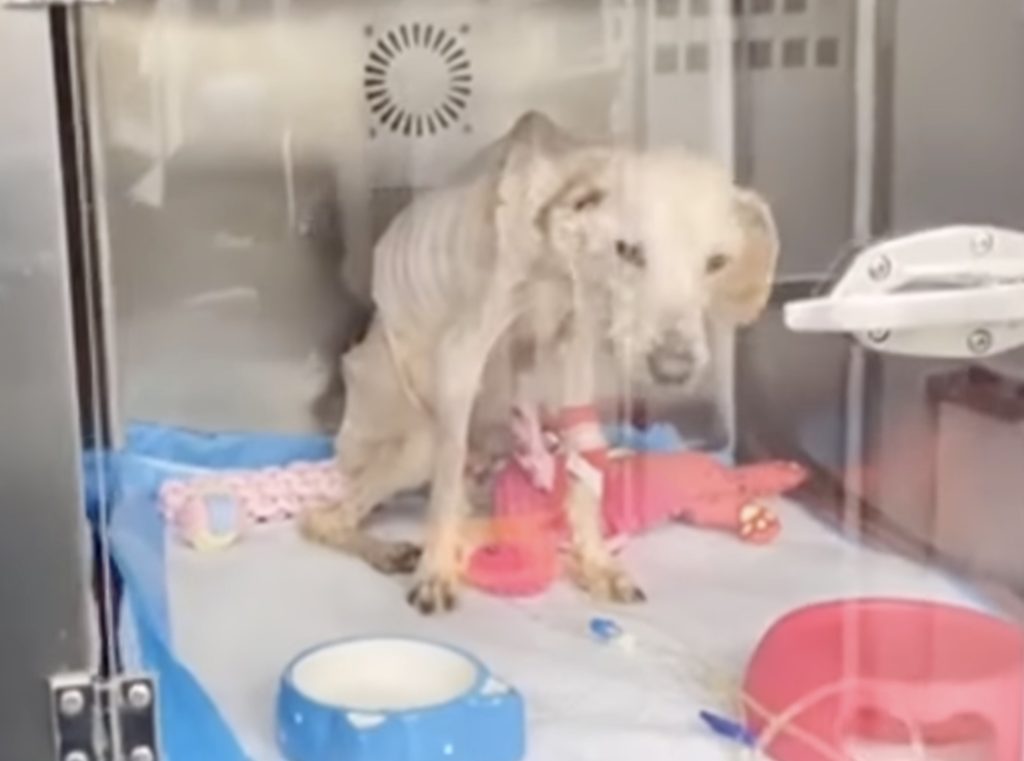
For the first few days, survival seemed uncertain. The little dog was so weak he couldn’t even stand on his own. His legs trembled whenever he tried, and more often than not, he would simply collapse onto the soft blanket beneath him. Eating was another challenge. His body had forgotten how to accept food, and the vets had to feed him slowly, gently coaxing him to take small bites. But even in that fragile state, there was something remarkable — a quiet determination, a will to live that refused to fade.
The staff began to see that spark grow stronger day by day. They set up a small space just for him, where he could rest without noise or disturbance. IV fluids helped stabilize him, and little by little, his body began to respond. Each morning, the team greeted him with soft words and kind hands. They massaged his legs to keep his muscles from stiffening, cleaned his wounds, and whispered encouragement as they worked.
By the sixth day, a small miracle happened — he lifted his head on his own. It wasn’t much, just a brief motion, but to everyone who had watched over him, it was everything. Soon after, he managed to sit up, his eyes brighter than they had been since the day he arrived. The nurses cheered softly, and one of them whispered, “You’re doing it, little one.” For the first time, it felt like hope had truly walked into that room.
He was only about five months old — still a baby — but his courage was something far beyond his age. Every time someone approached his cage, he wagged his tail weakly, as if to say thank you. Gratitude radiated from him in quiet, simple gestures. When they fed him soft pate, he would lick the spoon carefully, his eyes never leaving theirs. It was as if he knew that these people had saved his life, and every small act of kindness was returned tenfold in trust.
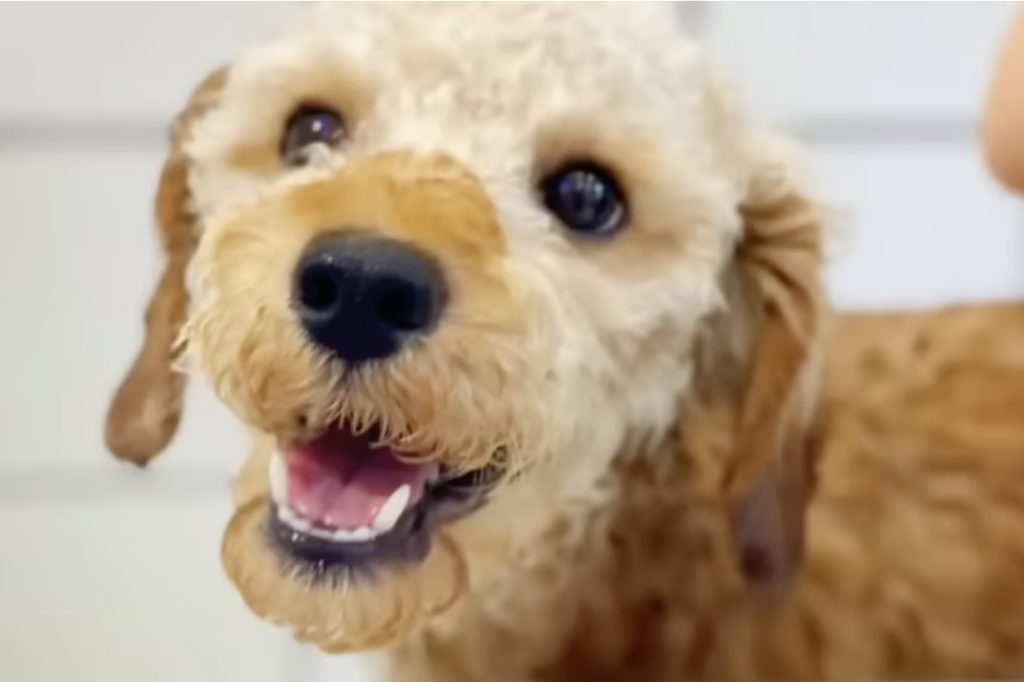
Days turned into weeks, and the transformation was nothing short of extraordinary. His body filled out; the sharp bones beneath his skin softened under healthy layers of new weight. His fur began to grow back — soft, golden, and clean. His eyes cleared, shining now with joy instead of pain. The same dog who once couldn’t stand was now running, tail wagging, across the clinic floor. He played with toys, barked happily when someone called his name, and even learned to chase a ball again. Each step he took was proof of how far he had come.
The staff, who had once feared he wouldn’t make it through the first week, now found themselves smiling every time they saw him. They had witnessed not just a recovery, but a rebirth. Forty-one days after he first arrived, he was unrecognizable. His body was strong, his spirit unbroken. He had become a symbol of resilience, a reminder that kindness and care can breathe life back into even the most fragile hearts.
When he was finally well enough to leave the clinic, everyone gathered to say goodbye. There were tears — the good kind — and smiles all around. The same hands that had once lifted his trembling body now stroked his healthy fur. The once-weak puppy nuzzled against them, full of warmth and gratitude. It was clear he remembered every gentle touch, every word of comfort.
His story stands as a powerful reminder that compassion has the power to heal in ways medicine alone cannot. To the people who rescued him, it may have been just one dog — one life out of millions. But for that one small life, it meant everything. It meant waking up to see another sunrise, to feel the touch of loving hands, to know that the world still held goodness.
Every life matters, no matter how small or broken it may seem. The love and dedication of those who refused to give up on him turned despair into hope, and hope into joy. He went from lying motionless on a clinic blanket to bounding across a sunlit yard, his tail wagging, his heart free. The scars of his past remained, but they no longer defined him. What defined him now was his strength, his gratitude, and the light in his eyes that said, “I made it.”
Saving one dog may not change the entire world — but for that one dog, the world becomes brand new. And perhaps, for those who open their hearts to help, their world changes too. Because in every act of kindness, in every moment of rescue, we are reminded of the simple truth that compassion still exists — and it has the power to bring the most beautiful transformations imaginable.