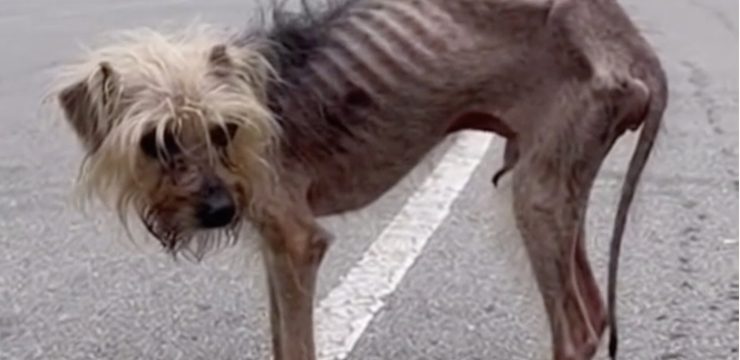
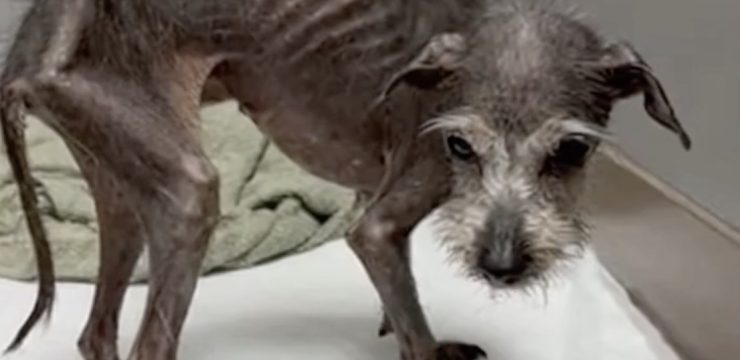
The story begins with an image that lingers in the mind—a haunting, tender picture of quiet suffering. On the side of a lonely dirt road lay a pregnant stray dog, her body fragile and still, her spirit worn thin by hardship. Dust clung to her matted fur, and her belly, heavy with life, rose and fell in shallow breaths. Whoever had abandoned her had not only taken away her safety but stripped her of dignity. When rescuers received the call, they raced toward the spot, their hearts filled with both fear and hope. But when they arrived, she was gone. Only faint paw prints remained in the dirt, leading away into the unknown.
For days, the volunteers searched relentlessly. They combed through the countryside, peered behind abandoned barns, and called softly into the wind, hoping that somewhere out there, she would recognize a gentle voice. With each day that passed, their worry deepened. They knew that time was not on her side. Then, one afternoon, they found her again—but the sight broke their hearts. She was no longer pregnant. Her frail body told the story of pain and loss, her eyes distant, hollow. Somewhere along the way, she had miscarried or lost her puppies, and now she carried not only the wounds of her body but also the unbearable weight of grief.
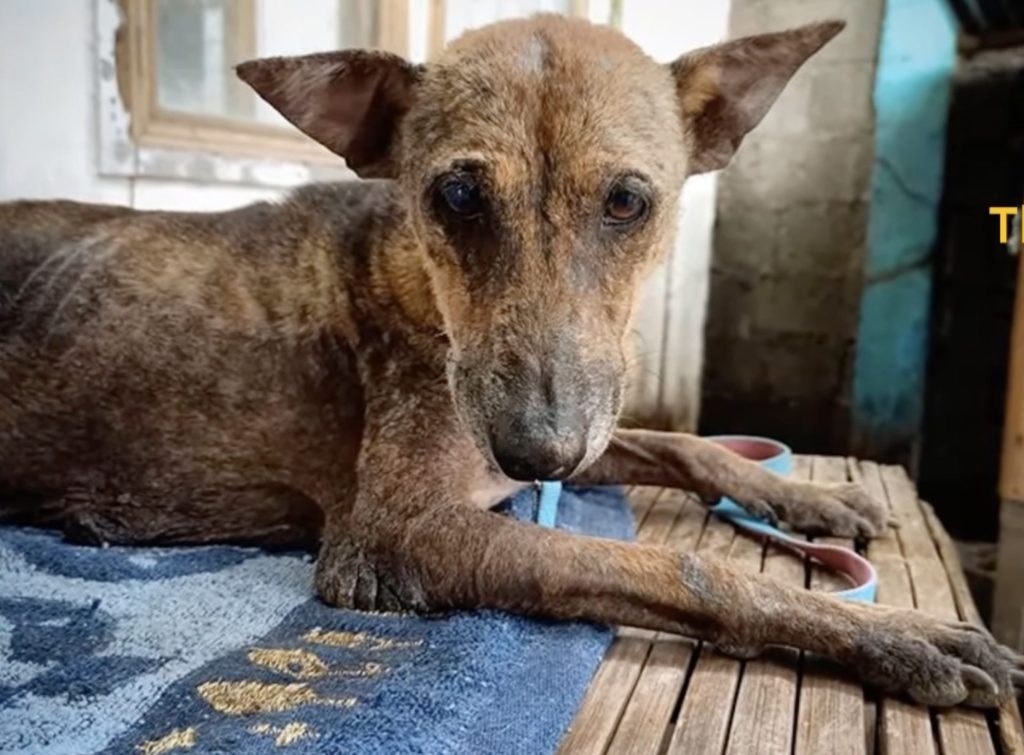
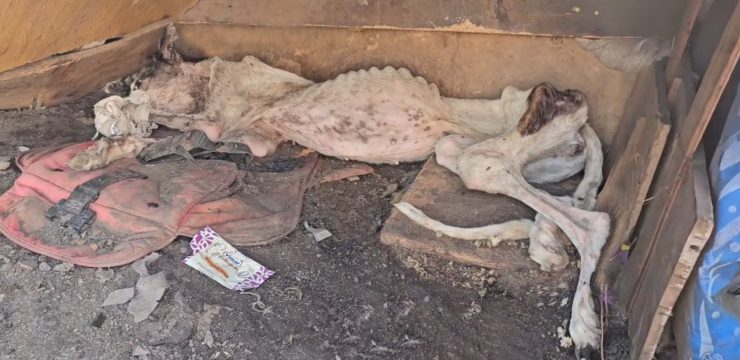
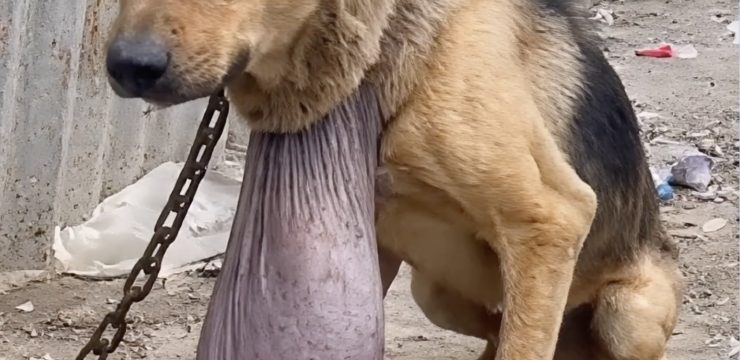
Her rescuers were shaken by how thin she had become. Every rib stood out beneath her dull coat, and her back legs trembled when she tried to walk. She was suffering from a painful medical condition that made each movement agony. Still, her instincts pushed her to survive. They found her wandering near a highway, dazed and exhausted, as cars roared past dangerously close. She seemed moments away from collapse, yet some spark inside her refused to give up.
Gaining her trust would be a different kind of battle—one that required patience, compassion, and silence. The rescuers placed food nearby, then stepped back to give her space. She watched from a distance, trembling, unsure whether to approach. Every small movement showed both her fear and her desperate need. When she finally took a few cautious steps toward the food, her body shaking, they stayed perfectly still. But the moment a human hand moved, she darted away again. This fragile dance of fear and hope went on for hours, a wordless exchange between souls who wanted the same thing: peace. Eventually, after countless gentle attempts, they managed to wrap her carefully in a blanket. She didn’t resist. Perhaps, deep down, she sensed that this time, she was safe.
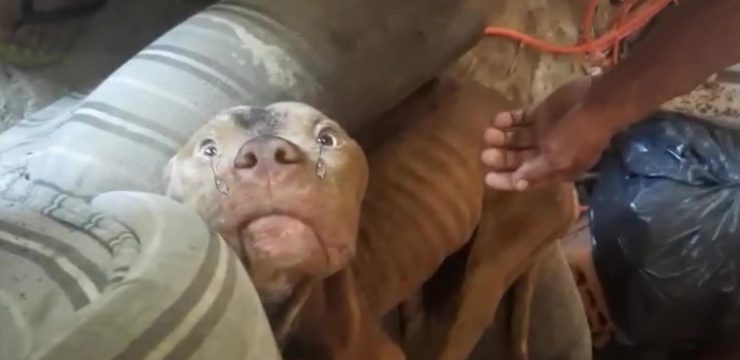
They named her Lisa. Every living being, they believed, deserved a name—a recognition that she was more than a number or a burden. Lisa’s battle, however, was far from over. Her body was weak, her spirit even weaker. She refused food and water, too scared to understand that what she was being offered was love. Volunteers began giving her fluids with a syringe, one drop at a time. She trembled with every touch, her memories of cruelty still fresh. But her caregivers refused to give up. They whispered to her softly, wrapping her in blankets and sitting nearby through the night, letting her feel the quiet rhythm of care.
Days blended into a pattern of small, hopeful gestures. Each morning, the team greeted her with kind voices, offering gentle words of comfort. They brought her warm food, clean bedding, and soft music to ease her fear. At first, Lisa would not eat. She would sniff the food and turn her head away, her eyes heavy with sorrow. But healing takes time, and rescue work is as much about patience as it is about medicine. The volunteers sat by her side, not forcing, not rushing—just being there. And one morning, a miracle happened. Lisa approached her food bowl. She hesitated, sniffed again, and began to eat. Slowly at first, then more eagerly. The rescuers watched in silence, tears forming in their eyes. That simple act meant more than words could say—it meant she had chosen to live.
From that moment, hope began to grow. Lisa’s body strengthened day by day. Her eyes, once clouded with fear, started to soften. She began to wag her tail, just a little, whenever her caregivers approached. Each sign of progress was celebrated—the first time she accepted a gentle touch, the first time she walked a few steps without trembling, the first time she rested her head in someone’s lap. Every small act was proof that love could heal what cruelty had broken.
Weeks later, Lisa took her first walk outside on a leash. The road that once symbolized pain now became the path toward her new life. She hesitated at every noise, every passing car, her body tense. But each time she faltered, her rescuer whispered softly, encouraging her forward. Step by step, she began to understand that the leash was not a chain—it was connection, care, and trust. With each walk, her confidence grew.
Eventually, Lisa became strong enough to play in the grass, to roll on her back under the sunlight, and to look into human eyes without fear. Her transformation touched everyone who had followed her journey. Her rescuers shared her story to raise awareness for all the animals still waiting for kindness. They reminded others that behind every stray is a life that longs to be seen, that compassion does not require much—just the will to care. They encouraged people to leave food and water for strays, to report injured animals, to support rescue groups that dedicate their lives to saving those who have no voice.
Lisa’s story became more than a rescue—it became a lesson. From the edge of despair, she found her way back to life through patience, care, and the quiet power of empathy. Her journey showed that healing is not just physical; it is the slow rebuilding of trust, the rediscovery of hope. Love, even the smallest act of it, can transform what once seemed beyond repair.
Today, Lisa’s eyes tell a new story. Where fear once lived, there is now calm. Where pain once ruled, there is peace. Her gentle gaze holds gratitude—an unspoken thank-you to those who refused to look away. She is living proof that kindness matters, that even a single act of compassion can change a life forever. For everyone who knows her story, Lisa is not just a dog who survived. She is a symbol of resilience, of the beauty that blooms when love replaces cruelty, and of the truth that no soul is ever too broken to be healed.