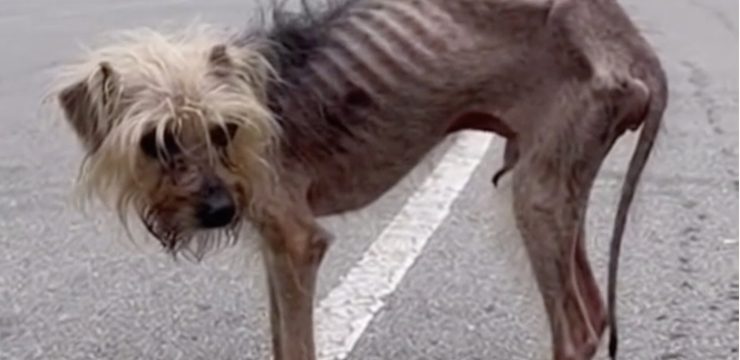
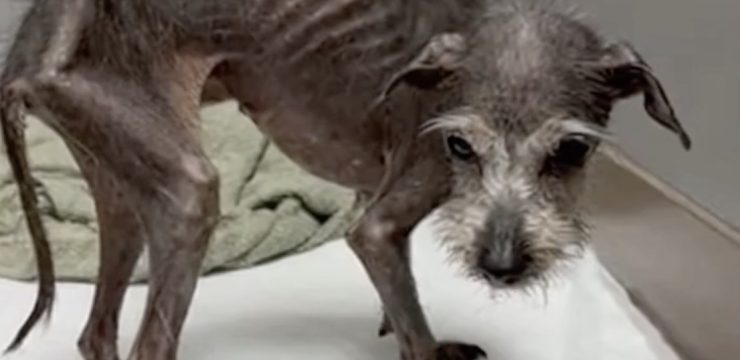
Few sights are more heartbreaking than an old dog abandoned when he needs compassion the most. Valentino, a gentle senior with graying fur and weary eyes, was found collapsed on a sidewalk, too weak to stand and too exhausted to cry out for help. After a lifetime marked not by comfort but by neglect, he had been discarded as though his years of loyalty meant nothing. Passersby might have seen only a frail body lying still against the concrete. But to the rescuers who stopped, he was a living soul clinging to his final thread of hope.
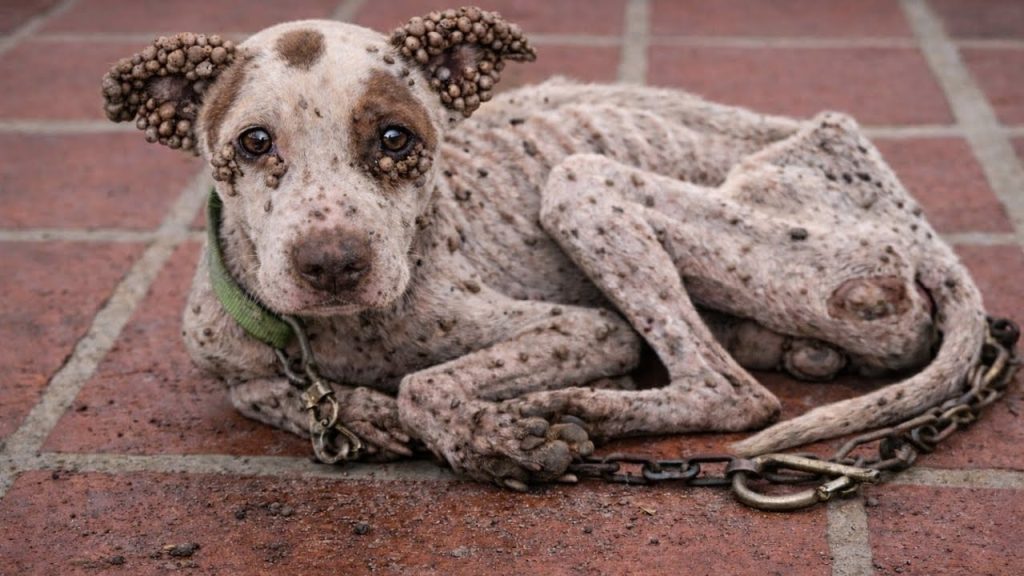
Up close, the reality of his condition was devastating. Valentino’s thin frame trembled with fatigue. His skin, once protected by a healthy coat, was overwhelmed by thousands of engorged ticks. These parasites had attached themselves everywhere—around his ears, along his neck, across his fragile torso—draining his blood and leaving him profoundly weakened. Each movement seemed to cost him what little strength he had left. He was not aggressive or fearful; he was simply spent, as if he had quietly accepted that this was how his story would end.
The rescue team immediately understood the urgency of the situation. Valentino’s age made everything more complicated. An elderly dog does not rebound the way a young one might. His immune system was compromised, his body malnourished, and his spirit worn down by years without consistent care. Removing the ticks would not be as simple as brushing them away. Each parasite had to be handled carefully to avoid further injury or infection. Because of his fragile state, even routine procedures carried risk. Sedation had to be considered cautiously. Every decision required patience, experience, and tenderness.
Veterinarians and volunteers worked slowly and methodically. Specialized medication was administered to begin killing the infestation safely. Warm baths were prepared to soothe his irritated skin. With gloved hands and steady focus, they removed tick after tick, hour after hour. It was painstaking work that demanded both medical precision and emotional resilience. The room was quiet except for gentle reassurances spoken to Valentino, who lay still, occasionally lifting his tired eyes as if trying to understand why, at last, someone was treating him with kindness.
Beyond the physical treatment, Valentino needed something even more fundamental: reassurance. For years he had been deprived not only of proper medical care but of affection and stability. Food had likely been inconsistent. Shelter uncertain. Human touch perhaps rare or rough rather than gentle. The rescue team understood that healing would require more than clearing parasites and stabilizing his vitals. It would require rebuilding trust.
Nutritious meals were introduced gradually to avoid overwhelming his system. Soft bedding replaced cold pavement. Instead of being ignored, he was spoken to, stroked gently, and monitored around the clock. Small signs of improvement began to appear. His appetite returned first, a hopeful indicator that his body was ready to fight. His eyes, once dull with exhaustion, started to brighten. Though still weak, he began lifting his head when caregivers entered the room. It was as if he was rediscovering the possibility that life might hold something better.
Days turned into weeks, and the transformation became nothing short of remarkable. As the infestation cleared completely and his skin healed, Valentino’s strength gradually returned. He gained weight in a healthy, steady way. His posture improved. Where there had once been only fatigue, there was now curiosity. He started taking short, careful walks. His tail, which had hung motionless, began to wag—first tentatively, then with genuine enthusiasm. The change was not instant or effortless; it was the result of consistent care, thoughtful medical intervention, and unwavering compassion.
For those who followed his journey, Valentino became a symbol of resilience. Senior dogs are often overlooked in shelters and rescue situations, yet they carry a lifetime of loyalty in their aging hearts. Valentino’s recovery served as a quiet reminder that no animal is beyond hope simply because of age. When given safety, nourishment, and love, even the most fragile life can regain dignity and joy.
Within a month, the difference was visible to anyone who saw him. His coat began to grow back healthier. His body no longer appeared skeletal. Most striking of all was the shift in his expression. The same eyes that once reflected exhaustion and resignation now reflected trust. He leaned into gentle touches. He rested peacefully, no longer in survival mode but in comfort. The dog who had been left behind on a sidewalk was now surrounded by people committed to ensuring he would never experience such abandonment again.
Yet rescue was only the first chapter of his new life. The team made a heartfelt promise: Valentino would find a true forever home. Not a temporary solution. Not another uncertain arrangement. A place where he would be cherished, protected, and allowed to spend his remaining years in peace. For a senior dog, time is precious. Every day matters. The goal was not simply to extend his life, but to enrich it—to make each sunrise gentle and each night secure.
Valentino’s story resonates deeply, especially for those who understand the value of loyalty and long companionship. Many older Americans know what it means to care for a beloved pet through every season of life. They understand that aging does not diminish worth. If anything, it deepens it. Valentino’s rescue stands as a testament to compassion in action, a reminder that kindness can rewrite even the bleakest chapter.
Today, Valentino is no longer defined by neglect. He is defined by survival, by the hands that refused to walk away, and by the promise of a home where he will never be alone again. His journey affirms a simple but powerful truth: love, when offered freely and consistently, has the power to restore not only health, but hope.