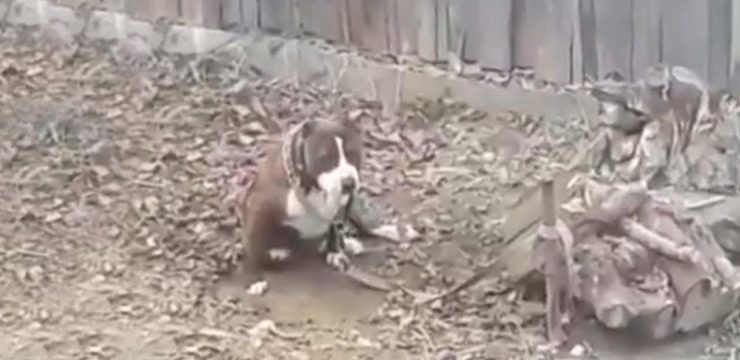
Tori’s story is one that lingers in the heart long after the screen fades to black. It is the story of a dog who had endured so much cruelty and neglect that he no longer believed kindness was possible. By the time rescuers found him in a small local shelter, he was not simply scared—he was emotionally shattered. His spirit had been worn down by long-term abuse, leaving him convinced that every human hand meant harm rather than help.

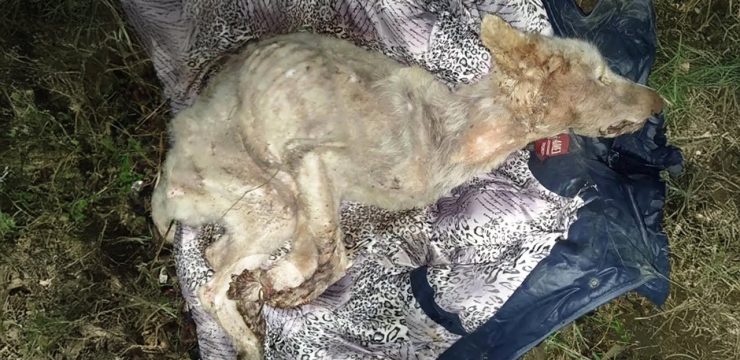
When Tori was first brought to safety, his fear was overwhelming. He pressed himself into corners, trying to make his body as small and invisible as possible. Any sudden movement or unfamiliar sound sent him into panic. He avoided eye contact. He trembled at the slightest approach. The trauma he carried was so severe that he could not even control his bladder, a heartbreaking sign of just how deeply anxiety had taken hold of him. This was not a dog being “difficult.” This was a living being who had learned, through repeated pain, that the world was unsafe.
For the first several days, progress seemed almost impossible. Tori remained in a constant state of high alert. His muscles were tense, his breathing shallow and rapid. He refused comfort, not because he didn’t need it, but because he did not yet trust it. Those caring for him understood that healing would not come through force or urgency. It would come through patience—slow, steady, unwavering patience.
So they waited.
They sat quietly near him without demanding interaction. They spoke in gentle tones. They respected his space. They allowed him to observe without pressure. In a world that had once overwhelmed him, they created calm. In a life that had known chaos, they offered consistency.
Then, one small but extraordinary moment changed everything.
After more than two weeks of fear and hesitation, Tori did something brave. He leaned forward and softly licked his rescuer’s hand. It was a tiny gesture by outward standards, but in truth, it was monumental. That single lick represented a crack in the wall he had built around himself. It was his first step toward trust. It was a sign that somewhere deep inside, hope still lived.
From that point forward, healing did not happen overnight—but it did happen.
Day by day, Tori began to relax in small, measurable ways. His eyes softened. His body language shifted from rigid to cautiously curious. He started exploring his environment instead of hiding from it. Each step forward was earned, not rushed. His caretakers celebrated quiet victories: a tail wag that lasted a few seconds longer, a willingness to approach on his own, a sigh of relief as he settled down to rest.
By the second month, the transformation was becoming visible to anyone who looked closely. Tori no longer viewed every human movement as a threat. He allowed gentle petting. He accepted treats from an open palm. Most telling of all, he chose to lie beside his caretaker and eventually fell asleep there. For a dog who once trembled in isolation, sleeping peacefully next to a human being was a powerful declaration of trust. Sleep is vulnerability. It requires safety. And for the first time in a long time, Tori felt safe.
As the weeks passed, his personality began to emerge like sunlight after a long winter. Beneath the trauma was a dog with warmth and intelligence. He showed flashes of playfulness. He responded to his name. He sought out affection rather than shrinking away from it. The fragile, frightened animal who once hid in corners was gradually replaced by a dog learning how to be a dog again.
It is important to understand that this transformation did not erase his past. Trauma leaves marks. But what love and steady care accomplished was remarkable. They rewrote his expectations. Where he once anticipated harm, he began to anticipate kindness. Where he once expected abandonment, he discovered reliability. Over time, those new experiences reshaped his responses to the world around him.
After more than four months in loving care, the change was undeniable. Tori stood taller. His movements were confident instead of hesitant. His body, once frail and tense, appeared healthier and stronger. He greeted familiar faces with a wagging tail. He explored his surroundings with curiosity rather than fear. The dog who had arrived emotionally paralyzed was now joyful and engaged.
What makes Tori’s journey so powerful is not just the visible transformation, but the message behind it. His recovery is proof that even the most wounded hearts are capable of healing when met with compassion. It reminds us that patience is not passive; it is active, intentional love in motion. It requires time, empathy, and the willingness to move at another being’s pace.
For many who have loved animals over the years, Tori’s story resonates deeply. It speaks to something universal: the idea that trust, once broken, can be rebuilt. It affirms that kindness is never wasted, even when progress feels slow. Sometimes healing is measured not in leaps, but in inches.
Tori began his journey terrified and defeated, a dog who had lost faith in humanity. He emerged from it happy, confident, and healthy—not because his past was forgotten, but because his future was nurtured. His story stands as a testament to resilience, both his own and that of those who refused to give up on him.
In the end, Tori did more than recover. He rediscovered what it feels like to belong. And in doing so, he offers all of us a gentle reminder: love has the power to restore what fear once tried to erase.