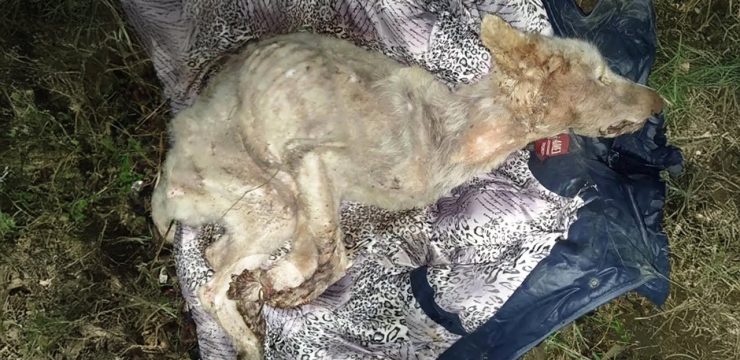
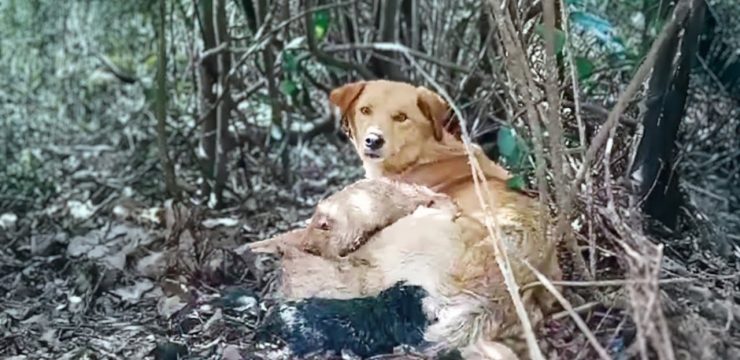
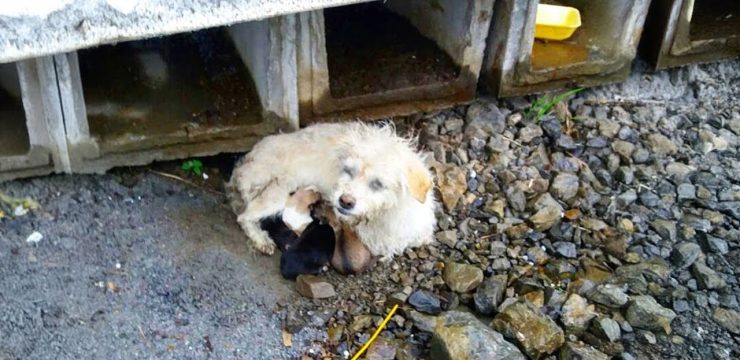
For three long, punishing weeks, a helpless dog was left to endure the blazing heat of the sun with no shelter, no steady source of water, and no one to care whether he lived or died. By the time rescuers found him, his frail body told the story of prolonged neglect. He was lying in a remote area where few people ever passed, too weak to rise, too exhausted to even lift his head for long. Every movement seemed to cost him what little strength he had left. It was painfully clear that he had not wandered there by accident. He had been intentionally abandoned, left alone to face conditions no living creature should ever have to endure.
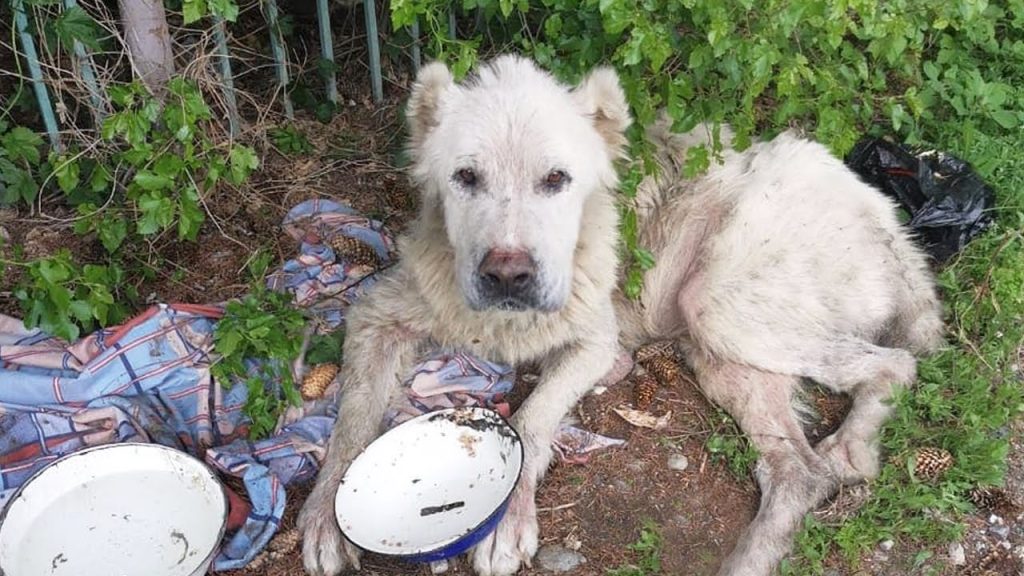
When the rescue team first approached him, they were struck by how completely defeated he appeared. His body was thin and motionless, his legs unable to support him. He did not bark or struggle. Instead, he looked up with tired eyes that seemed to ask a silent question: would this moment bring more hardship, or was help finally here? For anyone who has ever loved a dog, that expression was impossible to forget. It reflected not aggression or fear, but pure exhaustion and a fading hope that perhaps someone might still care.
Carefully and gently, the rescuers lifted him and brought him to safety. The transition from isolation to protection marked the first turning point in his story. At the shelter, he was given something he had not known for weeks—a comfortable space where he could rest without fear. Soft bedding replaced the scorching ground. Clean water was placed within reach. Nutritious meals were offered on a regular schedule, restoring a sense of rhythm and stability to his life.
One of the most moving moments came during his first proper feeding. As the bowl was set in front of him, he hesitated, almost as if he could not believe it was truly meant for him. There was a depth of emotion in his eyes that spoke volumes. For three weeks, survival had depended on endurance alone. Now, in this quiet room, someone was kneeling beside him, offering nourishment with patience and kindness. He began to eat slowly, cautiously, as though savoring not just the food but the realization that he was no longer invisible.
Recovery, however, was not immediate. Weeks of exposure and weakness had taken their toll. His muscles had deteriorated from lack of movement, and his legs could barely hold his weight. At first, he remained mostly still, gathering strength in small increments. The shelter staff monitored him closely, providing consistent care and encouragement. They understood that healing would require more than meals and rest. It would require reassurance, gentle rehabilitation, and time.
Gradually, subtle changes began to appear. His eyes grew brighter. He lifted his head more often when someone entered the room. He responded to soft voices and gentle touches. These were small signs, but they signaled that his spirit had not been extinguished. Beneath the physical weakness, there remained a will to live.
Then came a moment that felt nothing short of miraculous. With trembling effort, he attempted to stand. His legs shook under the strain, and for a brief second it seemed he might collapse again. But he persisted. Supported by steady hands nearby, he found enough strength to rise onto all fours. The room filled with quiet encouragement, not loud celebration but heartfelt hope. Though unsteady and fragile, he was standing on his own.
In the days that followed, those attempts became more frequent. Each step was uncertain, each movement cautious. His legs remained weak and unsteady, and there were moments when he needed assistance. Yet his determination was unmistakable. The dog who once lay motionless under the sun was now pushing himself forward, step by step, reclaiming his life.
For many viewers, especially those who have spent decades caring for family, friends, and beloved pets, this transformation resonates deeply. It is a reminder that resilience often reveals itself in the quietest ways. Healing does not always arrive with dramatic fanfare. Sometimes it shows up as a shaky first step, a hesitant wag of the tail, or a soft gaze filled with renewed trust.
His journey underscores a powerful truth: love and consistent care can restore what neglect tried to erase. Proper nutrition rebuilt his body. Gentle rehabilitation strengthened his muscles. Compassion restored his sense of safety. Piece by piece, the brokenness gave way to hope.
Today, he no longer lies helpless and alone. He rests in comfort, surrounded by people who see his value and are committed to his well-being. The same eyes that once reflected despair now hold quiet confidence. He may still carry the memory of those difficult weeks, but they no longer define him. What defines him now is perseverance, the kindness of strangers who refused to look away, and the simple yet profound power of being given another chance.
For anyone watching, his story serves as both inspiration and gentle call to action. Countless animals still wait in similar circumstances, hoping for relief, hoping for someone to notice. This rescue demonstrates that intervention matters. When compassion meets action, lives can be transformed.
In the end, this dog’s journey is not only about survival. It is about restoration. It proves that even when a soul appears utterly worn down, there can still be strength hidden beneath the surface. With patience, dedication, and heartfelt care, even the most broken lives can find their way back to warmth, dignity, and happiness.